What Is ROV Inspection?
ROV inspection uses a Remotely Operated Vehicle — a tethered, unmanned submersible — to conduct visual and sensor-based assessments of underwater structures, vessels, and industrial assets in Singapore. The ROV is controlled by a trained pilot from a surface station via an umbilical cable that transmits power, video, and data in real time. This eliminates the need to deploy commercial divers into hazardous underwater or confined space environments.
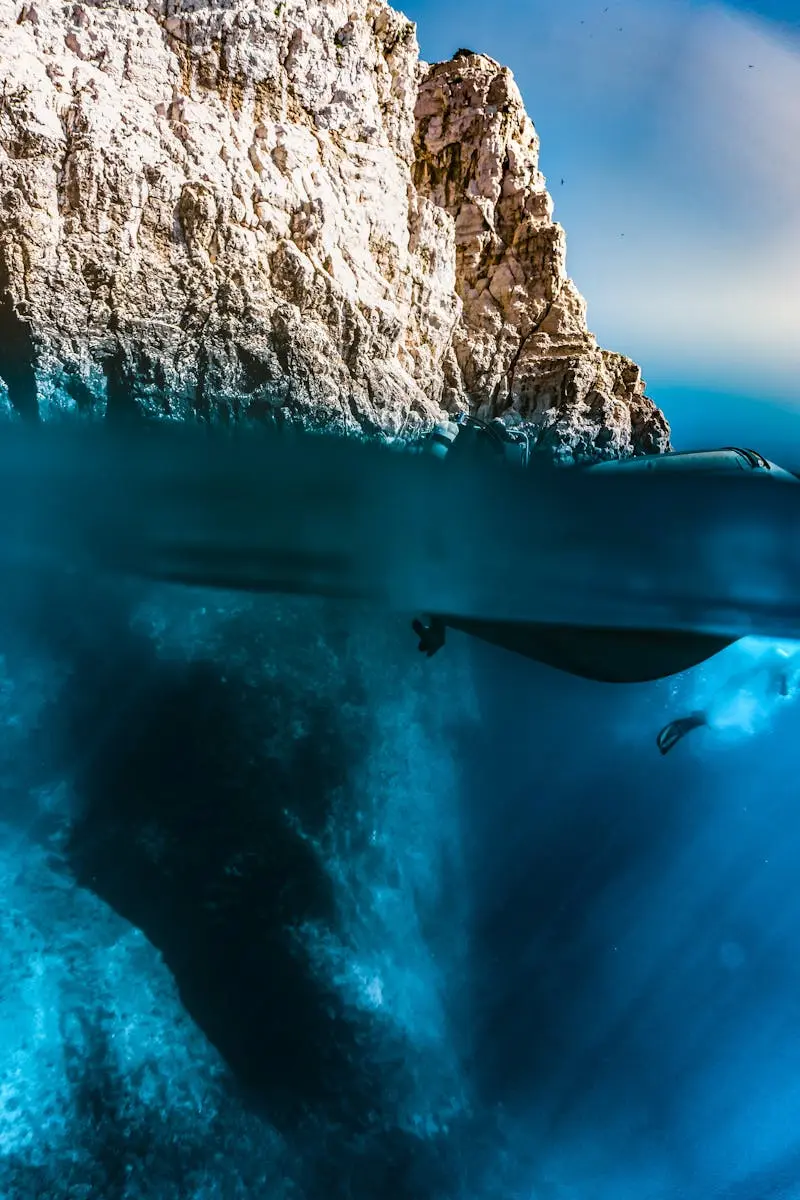
In Singapore's context, ROV inspection serves three major sectors. The maritime sector uses ROVs for in-water hull surveys at the world's busiest port. The industrial sector deploys ROVs into flooded tanks, chambers, and process vessels across Jurong Island's petrochemical complexes. The infrastructure sector relies on ROVs to assess jetty piles, seawalls, and submarine pipelines that support Singapore's coastal installations.
Modern inspection-class ROVs carry far more than cameras. They can be equipped with ultrasonic thickness gauges to measure steel plate thickness without dry-docking, cathodic protection probes to verify corrosion protection systems, multi-beam sonar for acoustic imaging in zero visibility, and cleaning brushes to remove marine growth for localised close-up inspection of steel surfaces.
Types of ROVs We Deploy
Different inspection tasks demand different ROV capabilities. We select the right vehicle class for each project based on depth, access constraints, sensor requirements, and operating conditions.
Observation-Class ROVs
Compact vehicles weighing 5-25 kg, rated to 150 metres depth. Equipped with 4K cameras, LED lighting, and laser scalers. Ideal for hull surveys, marina inspections, and sheltered water assessments. Small enough to deploy from a RIB or dockside.
Inspection-Class ROVs
Mid-size vehicles weighing 30-100 kg, rated to 300 metres. Carry additional sensors: ultrasonic thickness gauges, CP measurement probes, scanning sonar, and cleaning brushes. Used for detailed structural assessments, pipeline surveys, and class society surveys requiring quantitative data.
Mini ROVs for Confined Spaces
Ultra-compact vehicles designed for entry through manholes as small as 400mm diameter. Used for ballast tank inspection, potable water tank surveys, and flooded confined space assessments. Eliminates the need for personnel to enter dangerous enclosed environments.
Crawling ROVs
Magnetic-wheeled robots that attach to steel structures and crawl along hulls, tank walls, and pipelines. Carry ultrasonic thickness gauges for steel plate measurement without cleaning. Used for internal tank inspection and hull plating assessment in dry dock or afloat.
ROV Inspection Applications in Singapore
Our ROV inspection services cover a wide range of marine, industrial, and infrastructure applications across Singapore.
- In-Water Hull Surveys — UWILD (Underwater Survey In Lieu of Dry-Docking) for Singapore-flagged and international vessels. Hull coating condition, biofouling, propeller, rudder, sea chests, and cathodic protection assessment. Class society compliant.
- Ballast Tank Inspection — ROV entry into flooded ballast tanks to assess coating condition, structural members, and corrosion without tank emptying or confined space entry. Saves 2-3 days of tank preparation time per tank.
- Jetty and Port Infrastructure — underwater assessment of jetty piles, quay walls, fender systems, and mooring dolphins at PSA terminals, Jurong Port, and marina berths.
- Pipeline and Cable Surveys — route surveys for submarine pipelines, outfall pipes, and telecommunications cables. Tracking alignment, burial depth, free spans, coating condition, and seabed interaction.
- Industrial Tank Inspection — flooded process vessels, cooling water chambers, and storage tanks at Jurong Island refineries and petrochemical plants. The ROV inspects internal walls, baffles, and floor plates without draining the tank.
- Offshore Platform Assessments — jacket structures, risers, J-tubes, and subsea wellheads for Singapore-based offshore operators and FPSO support vessels.
ROV Inspection Pricing in Singapore
ROV inspection pricing depends on the vehicle class required, duration, depth, and sensor package. All quotes are fixed-price.
| Application | ROV Class | Price Range (SGD) |
|---|---|---|
| Hull Survey (UWILD) | Observation / Inspection | $5,000 — $12,000 |
| Ballast Tank Inspection | Mini / Observation | $5,000 — $10,000 |
| Jetty Pile Assessment | Observation | $5,000 — $15,000 |
| Pipeline / Cable Survey | Inspection | $8,000 — $20,000 |
| Industrial Tank (flooded) | Mini / Observation | $5,000 — $12,000 |
| Seawall / Quay Wall | Observation / Inspection | $8,000 — $20,000 |
Prices include: ROV mobilisation, pilot and survey engineer, video and sonar data capture, post-processing, and inspection report. MPA permits and workboat charter are included where applicable.
Our ROV Inspection Process
Project Scoping
We discuss the asset type, inspection objectives, access conditions, and deliverable requirements. For class society surveys, we confirm the specific requirements with the attending surveyor. MPA permits are applied for where needed.
ROV Selection and Preparation
We select the appropriate ROV class and sensor package for the job. The vehicle is function-tested, cameras calibrated, and sensors verified before mobilisation. Backup equipment is prepared for critical projects.
Site Mobilisation
Our team deploys to the inspection site with all ROV equipment, control systems, and support gear. For vessel surveys at anchorage, we mobilise via workboat. For quayside and industrial sites, we set up directly on the structure.
Survey Execution
The ROV pilot conducts the inspection following the agreed survey plan. Real-time video is displayed on surface monitors for the client representative and, where applicable, the class society surveyor. Anomalies are investigated and documented live.
Reporting
A detailed inspection report is delivered within 7-14 working days. Reports include annotated video stills, defect inventories, measurement data, condition assessments, and maintenance recommendations formatted for the client's asset management system or class society submission.
Why Choose SG Drone Inspections for ROV Work
- Multi-Class ROV Fleet — we operate observation, inspection, mini, and crawler ROVs to match every application. No single-vehicle limitation.
- Singapore Port Expertise — experienced in MPA regulations, port coordination, and Singapore Strait operating conditions including high traffic, strong currents, and limited visibility.
- Class Society Relationships — our reports are accepted by DNV, Lloyd's Register, Bureau Veritas, ClassNK, and ABS. We coordinate directly with attending surveyors.
- Combined Aerial + Underwater — we pair above-water aerial drone inspection with below-water ROV surveys for complete structural assessments of marine infrastructure.
- Fixed Pricing — every quote is a fixed price. No day-rate surprises, no standby charges, no hidden mobilisation fees.
Frequently Asked Questions
Get a Free ROV Inspection Quote
Tell us what you need inspected — vessel, tank, or infrastructure — and we will reply with a fixed-price quote within 24 hours.